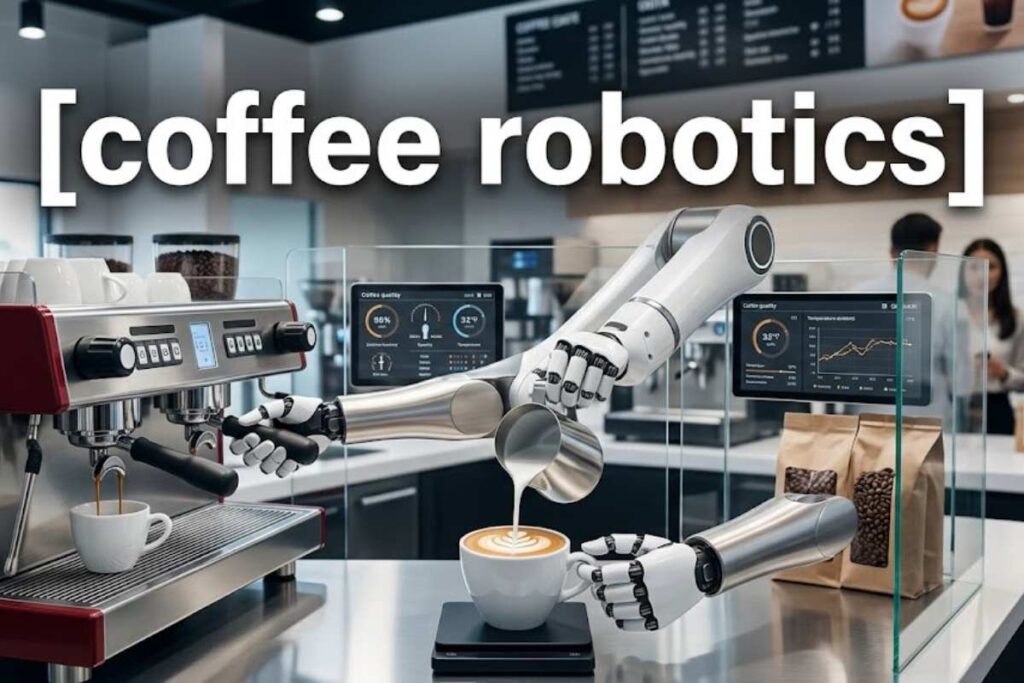
Coffee robotics is no longer a futuristic concept; it’s already reshaping how coffee is prepared, served, and scaled across the world. From robotic café kiosks in airports to fully automated coffee shops, this technology blends robotics, AI, and precision engineering to deliver consistent drinks with minimal human involvement.
For business owners, it promises efficiency and lower labor costs. For consumers, it offers speed and novelty. This article breaks down how these systems work, what they cost, where they’re used, and whether they’re truly worth the investment.
What is Coffee Robotics?
Definition of Coffee Robots and Robotic Café Systems
At its core, coffee robotics refers to automated systems that can prepare coffee drinks using robotic arms, smart software, and integrated brewing equipment. These systems replicate the tasks of a human barista from grinding beans to pouring milk.
Difference Between Coffee Robots, Vending Machines, and Traditional Coffee Machines
While they may look similar at first glance, the differences are significant:
| Feature | Coffee Robot | Vending Machine | Traditional Machine |
| Customization | High | Limited | High (manual) |
| Human involvement | None | None | Required |
| Drink quality | High | High | High |
| Experience | Interactive | Basic | Personal |
Evolution of Coffee Automation
Initially, automation meant simple drip machines. Over time, espresso machines added precision. Now, robotic systems combine hardware and software to mimic human baristas with remarkable accuracy.
How Coffee Robots Work
Core Components of a Coffee Robot System
Robotic Arm Technology
This is the physical “barista.” It moves with programmed precision to grind beans, handle cups, and pour drinks.
AI and Software Integration
Software controls recipes, timing, and customization. Some systems even learn from user preferences.
Sensors and Precision Brewing Systems
Sensors ensure temperature control, pressure accuracy, and consistency across every cup.
Step-by-Step Process of a Robot Barista
- User places an order via app or touchscreen
- System processes customization
- Robotic arm prepares ingredients
- Coffee is brewed and assembled
- Drink is delivered automatically
Customization and Smart Ordering Systems
Many setups allow users to adjust:
- Milk type
- Sugar level
- Flavor syrups
- Temperature
Types of Coffee Robotics Systems
Robotic Café (Fully Automated Coffee Shops)
These are standalone shops with no staff, often operating 24/7.
Coffee Robot Kiosks
Compact units placed in malls, airports, and offices.
Coffee Robot Vending Machines
More advanced than traditional vending machines, offering barista-level drinks.
Industrial Coffee Robot Systems
Used in factories for large-scale production and packaging
Key Features of Coffee Robots
Drink Variety and Customization
Modern systems can prepare dozens, sometimes hundreds, of drink combinations.
Speed and Efficiency
A single unit can produce a drink in under 2 minutes.
Consistency in Taste and Quality
Unlike humans, robots don’t vary in performance.
24/7 Operation Capability
These systems can run continuously without breaks.
Benefits of Coffee Robotics
Reduced Labor Costs
One of the biggest drivers of adoption. Fewer employees are needed.
Operational Efficiency and Scalability
Businesses can deploy multiple units without increasing staff proportionally.
Improved Hygiene and Precision
Minimal human contact reduces contamination risks.
Consistent Customer Experience
Every cup is made using the same parameters.
Limitations and Challenges of Coffee Robotics
High Initial Investment
Startup costs can range from $20,000 to over $100,000.
Maintenance and Technical Issues
Regular servicing is required. Breakdowns can halt operations completely.
Limited Human Interaction
Some customers still prefer a human touch.
Taste vs Human Barista Debate
While consistent, robots may lack the nuance of skilled baristas.
Downtime and System Failures
Unlike humans, a single malfunction can stop the entire system.
Coffee Robotics vs Traditional Coffee Shops
Cost Comparison
Robotic systems reduce long-term labor costs but require higher upfront investment.
Customer Experience Comparison
Traditional cafés offer ambiance and interaction. Robots offer speed and novelty.
Speed and Service Efficiency
Robots typically outperform humans during peak hours.
Profitability Differences
Automation can improve margins if volume is high enough.
Coffee Robotics vs Coffee Vending Machines
Technology Differences
Robots use articulated arms and AI, while vending machines rely on pre-set mechanisms.
Quality and Customization
Robotic systems provide a more premium experience.
Use Cases and Locations
Vending machines fit low-cost environments; robots suit high-traffic, premium areas.
Real-World Applications of Coffee Robotics
Airports and Transit Hubs
High demand and limited staff make these ideal locations.
Offices and Corporate Spaces
Convenience for employees without needing a full café setup.
Shopping Malls and Retail Locations
Attracts customers through novelty and speed.
Events and Exhibitions
Used as interactive experiences and brand showcases.
Coffee Robot Business Models
Coffee Robot Franchise Opportunities
Some companies offer franchise packages with full setup and support.
Coffee Robot Kiosk Business Model
Low footprint, high traffic—ideal for urban environments.
Automated Coffee Shop Setup
Full-scale operations without traditional staff.
Coffee Robot Cost Breakdown
Initial Setup Cost
- Equipment: $20,000–$100,000+
- Installation: $2,000–$10,000
Maintenance and Operational Costs
- Monthly servicing
- Software updates
- Ingredient restocking
Software and Licensing Costs
Some systems charge subscription fees for updates and analytics.
ROI and Payback Period
Typically ranges from 12 to 36 months depending on location and volume.
Profitability of Coffee Robotics
Revenue Streams
- Direct coffee sales
- Subscription models
- Advertising screens
Profit Margins
Margins can exceed 60% due to reduced labor costs.
Break-Even Analysis
High-traffic locations reach profitability faster.
Key Factors Affecting Profitability
- Foot traffic
- Pricing strategy
- Maintenance costs
Popular Coffee Robot Machines and Systems
Coffee Robot C1 Pro
Known for compact design and high efficiency.
Robotic Arm Coffee Machines
Focus on precision and visual appeal.
Coffee Robot Factory Systems
Designed for mass production.
Comparison of Leading Coffee Robot Models
| Model | Price Range | Best For |
| C1 Pro | Mid-range | Small businesses |
| Industrial Systems | High | Large-scale operations |
Coffee Robotics Around the World
USA (Seattle, SFO)
Early adopters with strong tech integration.
Chile
Emerging market with growing adoption.
Global Trends
Asia and Europe are rapidly expanding in this space.
Black Coffee Robotics
Company Overview
A tech-focused firm working on automation solutions.
Location
Primarily based in tech hubs.
Internship Opportunities
Offers roles in AI, robotics, and software development.
Salary Insights
Varies by role, typically aligned with tech industry standards.
GitHub and Tech Stack
Focus on robotics frameworks and AI tools.
Technology Behind Coffee Robotics
AI in Coffee Brewing
AI helps optimize recipes and adapt to user preferences.
Robotics Engineering
Precision hardware ensures consistent movement and accuracy.
IoT and Smart Connectivity
Machines can be monitored and controlled remotely.
Data Analytics and Customer Behavior Tracking
Businesses can analyze purchasing patterns to optimize offerings.
User Experience and Customer Perception
Do Coffee Robots Make Good Coffee?
Most users report consistent quality, though some prefer human-made drinks.
Customer Trust and Adoption Challenges
Initial skepticism often fades after first use.
Human vs Robot Barista Experience
Robots prioritize efficiency; humans offer personalization.
Future of Coffee Robotics
Trends in AI and Automation
Expect smarter systems with better personalization.
Expansion of Robotic Cafés
More cities are adopting automated setups.
Integration with Smart Cities
Connected systems may become part of urban infrastructure.
Will Coffee Robots Replace Human Baristas?
Unlikely, but they will complement traditional cafés.
Is Coffee Robotics Worth It?
For Business Owners
Worth considering in high-traffic areas.
For Investors
Promising but depends on execution.
For Consumers
Convenient and consistent, though not always experiential.
Conclusion:
Coffee robotics represents a shift toward automation in everyday experiences. It offers efficiency, consistency, and scalability, making it attractive for modern businesses. However, it’s not without challenges cost, maintenance, and customer perception all play a role.
For now, this technology is best seen as a complement rather than a replacement. The future likely holds a hybrid model where human creativity and robotic precision work side by side.
FAQs:
What is a coffee robot?
A system that uses robotics and automation to prepare coffee without human involvement.
How much does a coffee robot cost?
Costs range from $20,000 to over $100,000 depending on features and scale.
Are coffee robots profitable?
Yes, especially in high-traffic areas with consistent demand.
Where can I find a robotic café?
Common in airports, malls, and major cities.
Can coffee robots replace baristas?
They can handle repetitive tasks but may not replace human interaction entirely.
How do coffee robots work?
They use robotic arms, sensors, and software to automate the brewing process.