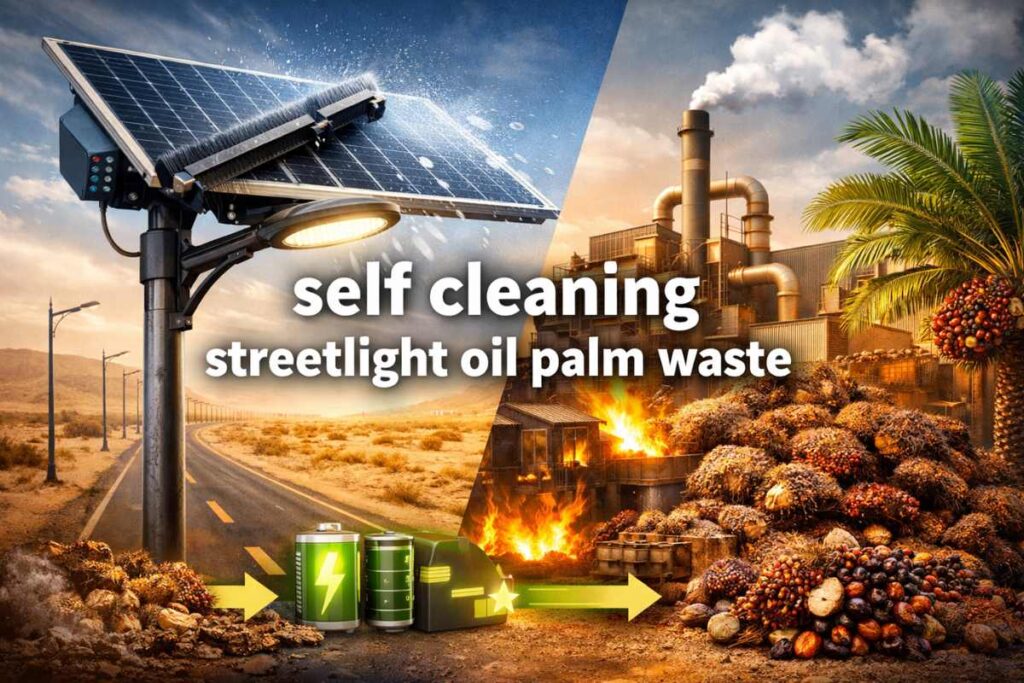
Urban and rural areas are increasingly turning toward smarter, cleaner infrastructure. One emerging idea is the self cleaning streetlight oil palm waste system, which combines solar-powered lighting with energy derived from agricultural residues. This approach aims to solve two persistent problems at once: maintaining solar efficiency in dusty environments and managing palm oil waste sustainably.
In simple terms, it blends self-cleaning solar streetlights with biomass energy from oil palm waste. The result is a low-maintenance, energy-efficient lighting solution that works even in harsh conditions like deserts or remote regions. While parts of this concept already exist in real-world applications, the fully integrated system is still evolving.
How Self-Cleaning Solar Streetlights Work
Overview of Solar Street Lighting Systems
At their core, solar streetlights operate independently of the electrical grid. They rely on a few key components:
Solar Panels and Energy Generation
Solar panels capture sunlight during the day and convert it into electricity. High-efficiency panels can reach 20–24% efficiency under optimal conditions.
Battery Storage Systems
Energy is stored in batteries, often lithium-based (like LiFePO₄), which provide power at night or during cloudy conditions.
LED Lighting Components
Modern LED lighting is highly energy-efficient, producing more light per watt while consuming less power compared to traditional bulbs.
Self-Cleaning Mechanisms Explained
Dust and debris can significantly reduce solar panel performance. To address this, advanced systems use automated cleaning solutions:
Automated Cleaning Systems
- Robotic brushes or wipers remove dirt
- Vibration systems shake off loose particles
- Scheduled cleaning cycles maintain efficiency
Hydrophobic and Anti-Soiling Coatings
These coatings repel water and dust, preventing buildup and making cleaning easier.
Smart Cleaning Cycles and Sensors
Sensors detect environmental conditions and adjust cleaning frequency accordingly, optimizing energy use.
How Systems Remove Dust Automatically
Instead of relying on manual labor, the system activates cleaning mechanisms at set intervals, ensuring panels remain clear without human intervention.
Why Regular Cleaning Is Critical
Dust accumulation is one of the biggest challenges for solar systems.
Impact on Efficiency
Studies show that solar panels can lose up to 40–50% efficiency due to dust in desert environments.
Problems with Manual Cleaning
- Requires frequent labor
- Increases operational costs
- Difficult in remote locations
Maintenance Challenges
In areas like highways or plantations, sending cleaning crews regularly is impractical. This is where automation becomes essential.
Role of Oil Palm Waste in Street Lighting Systems
Types of Oil Palm Waste
Palm oil production generates several by-products:
- Empty fruit bunches (EFB)
- Palm kernel shells
- Mesocarp fibers
- Palm oil mill effluent (POME)
Converting Palm Waste into Usable Energy
These materials can be transformed into energy through various processes:
Biomass Combustion
Burning palm residues generates heat and electricity.
Anaerobic Digestion
POME can produce methane gas, which is used as fuel.
Biodiesel Production
Extracted palm oil can be converted into biodiesel for energy applications.
Integration with Solar Lighting
This particular method combines solar and biomass energy:
Hybrid Solar-Biomass Systems
Solar acts as the primary source, while biomass provides backup power.
Backup for Low Sunlight
During cloudy days or dust storms, stored biomass energy ensures continuous operation.
Centralized vs Decentralized Models
- Centralized: Biomass plants supply energy to multiple lights
- Decentralized: Each unit has its own small energy source
System Architecture Explained
Understanding how the system works as a whole is crucial.
Energy Flow
- Solar panels generate electricity during the day
- Energy is stored in batteries
- Biomass energy supplements when solar is insufficient
Role of Self-Cleaning
By maintaining panel efficiency, the cleaning system ensures maximum energy capture.
Simple Breakdown
- Input: Sunlight + palm waste
- Process: Conversion + storage
- Output: Continuous street lighting
Key Features of These Systems
- Energy-efficient LED lighting
- Automatic cleaning technology
- Smart sensors and motion detection
- Battery storage optimization
- Weather-resistant design
- Reduced maintenance costs
Benefits of Self Cleaning Streetlight Oil Palm Waste Systems
Reduced Maintenance Costs
Automation eliminates the need for frequent manual cleaning.
Improved Energy Efficiency
Clean panels ensure consistent energy generation.
Continuous Performance
Hybrid systems provide backup during low sunlight periods.
Eco-Friendly Solution
Utilizes renewable energy and agricultural waste.
Ideal for Remote Areas
Perfect for off-grid locations where infrastructure is limited.
Circular Economy Support
Transforms waste into valuable energy resources.
Real-World Applications and Use Cases
Highways and Desert Roads
Reliable lighting in remote areas improves safety and visibility.
Airports and Aviation Infrastructure
Self-cleaning systems maintain performance in dusty environments.
Parks and Urban Spaces
Smart lighting enhances sustainability in cities.
Industrial and Oil Field Locations
Provides off-grid lighting in harsh conditions.
Rural Electrification
Supports communities without access to reliable electricity.
Comparison with Other Lighting Solutions
| Feature | Self-Cleaning Solar | Conventional Solar | Grid Lighting |
| Maintenance | Low | High | Medium |
| Energy Source | Solar + Biomass | Solar only | Grid electricity |
| Efficiency | High | Variable | Stable |
| Cost (Long-term) | Low | Medium | High |
Cost, ROI, and Economic Feasibility
Initial Costs
Higher than standard solar lights due to advanced features.
Maintenance Savings
Reduced labor costs lead to long-term savings.
ROI
Most systems recover costs within 3–5 years.
Lifecycle Analysis
Lower total cost over 10+ years compared to traditional systems.
Challenges and Limitations
High Upfront Cost
Initial investment can be significant.
Mechanical Wear
Cleaning systems may require occasional maintenance.
Extreme Conditions
Severe sandstorms can temporarily affect performance.
Biomass Availability
Not all regions have access to palm waste.
Technical Complexity
Hybrid systems require careful design and integration.
Regional Relevance and Global Potential
Middle East
Ideal for desert environments with high dust levels.
Southeast Asia
Abundant palm waste makes it highly viable.
Africa
Useful for off-grid rural electrification.
Developing Economies
Supports sustainable infrastructure growth.
Alignment with Sustainability Goals
This approach contributes to:
- Reduced greenhouse gas emissions
- Renewable energy adoption
- Smart city development
- Circular economy practices
For deeper insights, consider linking to:
- International Energy Agency (IEA) reports
- UN Sustainable Development Goals
Future Trends and Innovations
Advanced Cleaning Technologies
New coatings and automation methods are emerging.
AI and IoT Integration
Smart systems can optimize performance in real time.
Improved Biomass Conversion
Higher efficiency energy generation from waste.
Fully Autonomous Systems
Minimal human intervention in future designs.
How to Build a Prototype (Student Perspective)
Basic Components
- Solar panel
- Battery
- LED light
- Cleaning mechanism
Design Approach
Start with a simple solar system, then integrate cleaning features.
Challenges
- Cost constraints
- System integration
- Efficiency optimization
Conclusion
The concept of self cleaning streetlight oil palm waste represents a promising step toward sustainable infrastructure. By combining solar energy with biomass and automation, it addresses key challenges like maintenance, efficiency, and energy reliability.
While the fully integrated system is still developing, the individual technologies are already proven. As innovation continues, this approach could become a standard solution for smart, eco-friendly lighting worldwide.
Frequently Asked Questions (FAQs)
What is a self cleaning streetlight oil palm waste system?
It is a hybrid lighting system that uses solar energy and palm waste-derived energy, combined with automatic cleaning technology.
Is this technology already in use?
Some components exist commercially, but fully integrated systems are still emerging.
How often do solar panels need cleaning?
In dusty regions, panels may need cleaning every few days without automation.
Can palm waste fully power streetlights?
It can act as a backup energy source, but solar remains the primary source.
What are the main benefits?
Lower maintenance, higher efficiency, and sustainable energy use.
Are these systems expensive?
They have higher upfront costs but offer long-term savings.