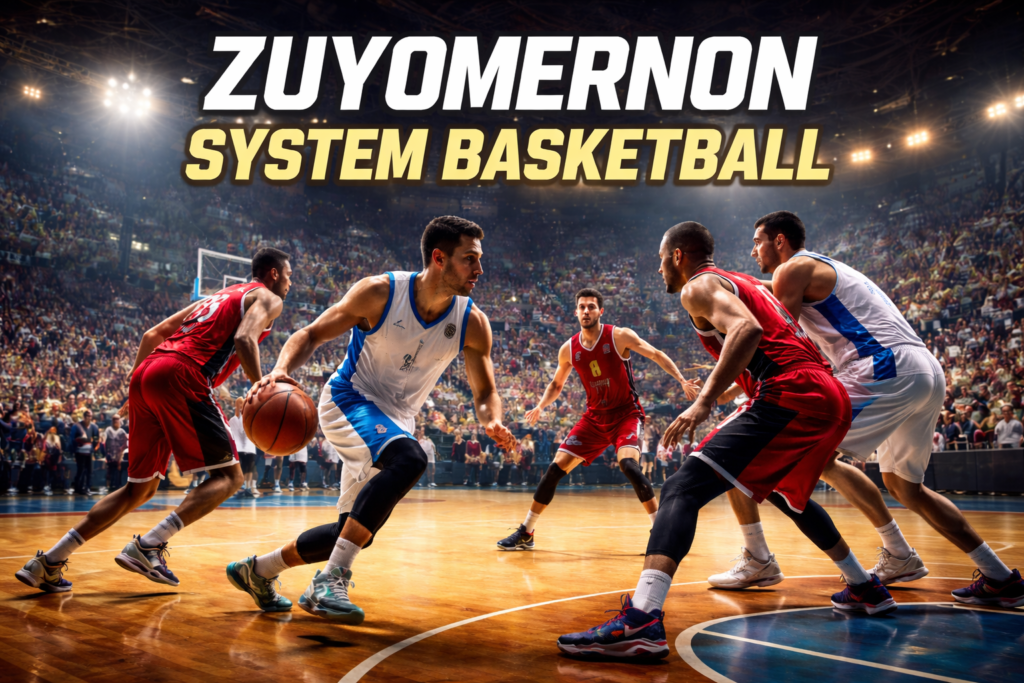
Basketball strategy constantly evolves and the Zuyomernon System Basketball represents a modern approach to team play player development. This method emphasizes fluid positioning versatile roles strategic adaptability offering coaches athletes a framework to enhance teamwork performance.
For anyone seeking to understand a system that blends philosophy tactical awareness practical drills this guide provides a comprehensive overview. Moreover the approach aims to equip players with a broader understanding of Zuyomernon System Basketball.
the court enabling smarter decision-making cohesive execution. Its relevance spans youth programs collegiate teams semi-professional leagues making it a valuable study for both aspiring experienced players Zuyomernon System Basketball.
History and Origins
Early Development Philosophy
The Zuyomernon System Basketball originated from innovative coaching ideas in the early 2000s. Coaches sought to move beyond rigid positional play encouraging athletes to think critically react dynamically during games. This system evolved as a response to the need for adaptable team strategies.
Influences from Other Coaching Styles
Drawing inspiration from motion offenses hybrid defenses positionless basketball trends the system synthesizes these philosophies into a unified method. Coaches emphasize creativity adaptability collective responsibility over individual dominance.
Timeline Evolution of the Concept
- Early 2000s: Conceptualized by visionary coaches
- Mid-2000s: Initial implementation in youth collegiate teams
- 2010s: Refinement wider adoption among semi-professional teams
Misconceptions About Its Origin
While some consider it a newly invented system it builds upon established basketball principles integrating them in a flexible principle-driven framework Zuyomernon System Basketball.
Core Principles of the Zuyomernon System Basketball
Positionless Strategy
Interchangeable Player Roles
Players are trained to handle multiple roles enabling smooth rotations across positions. Guards may perform post duties while forwards can initiate plays creating unpredictability for opponents.
Comparison with Traditional Positions
Unlike traditional systems which fix players into set roles this approach encourages fluidity emphasizing skill development over position specialization.
Dynamic Spacing
Floor Awareness Movement
Athletes learn to read teammates’ positioning adjust spacing continuously opening lanes preventing defensive congestion Zuyomernon System Basketball.
Creating Offensive Mismatches
By maintaining constant movement strategic spacing the system forces defenders into mismatches increasing scoring opportunities.
Defensive Versatility
Zone-to-Man Hybrid Defense
Players switch seamlessly between man-to-man zone principles adapting to opponent strengths game flow.
Rotations Coverage
Emphasis on rotations ensures consistent coverage limiting scoring chances while encouraging turnovers.
Sustainable Tempo
Controlling Game Pace
The system balances high-intensity bursts with controlled play conserving energy managing stamina over long games.
Endurance Load Management
Load is distributed across players reducing fatigue mitigating injury risks.
Team Collaboration Communication
Effective verbal non-verbal communication is central ensuring alignment on rotations offensive reads defensive responsibilities.
Benefits of the Zuyomernon System Basketball
Enhanced Player Development
Athletes gain a comprehensive skill set becoming proficient in dribbling shooting post-play defense.
Improved Team Chemistry Unity
By emphasizing shared responsibility the approach reduces ego conflicts fosters cohesive play.
Strategic Flexibility for Coaches
Coaches can adapt tactics in real-time shifting formations exploiting weaknesses without extensive playbook adjustments.
Injury Prevention Longevity
Rotating responsibilities sustainable tempo reduce physical strain supporting long-term player health.
Real-World Performance Impact
Teams implementing the system often report higher assist rates improved defensive efficiency more balanced scoring contributions.
Training Implementation
Skill Versatility Drills
Shooting Ball Handling Across Positions
Practice sessions rotate players through different positions enhancing all-around competency.
Post Perimeter Play
Players develop skills traditionally associated with other roles promoting adaptability.
Conditioned Scrimmages
Role Rotation Exercises
Scrimmages simulate game scenarios with fluid positional rotations.
Game Scenario Practice
Situational drills emphasize decision-making under pressure.
Communication Drills
Verbal Non-Verbal Team Signals
Drills focus on effective on-court communication to maintain system integrity.
Film Study Situational IQ
Recognizing Opportunities Beyond Set Plays
Reviewing footage helps players anticipate actions understand strategic principles.
Practice Scheduling Tips
Balancing Skill Development Recovery
Structured sessions ensure growth while preventing overtraining.
- Comparison with Traditional Basketball Systems
| Aspect | Traditional Systems | Zuyomernon System |
| Player Roles | Fixed by position | Interchangeable fluid |
| Offensive Flow | Structured plays | Responsive motion principles |
| Defensive Philosophy | Zone/Man specialization | Hybrid versatility |
| Tempo | Fast slow exclusively | Controlled switching rhythms |
| Player Development | Specialized by position | Comprehensive skill-building |
Real-World Applications
Semi-Professional Collegiate Teams
Teams in smaller leagues report improved cohesion adaptability using the system.
Youth Academy Adaptation
Developing athletes gain broader tactical awareness versatile skills early.
Lessons from Successful Coaches
Testimonial insights highlight improvements in communication teamwork in-game flexibility.
Case Studies Anecdotal Evidence
Illustrative examples demonstrate effective implementation in varied competitive environments.
Challenges Criticisms
Learning Curve for Players
Complex strategies may initially overwhelm less experienced athletes.
Discipline Consistency Requirements
Success depends on adherence to fundamentals strategic discipline.
Implementation in Traditional Teams
Integrating into rigid programs requires patience structural adaptation.
Misinterpretation Risks Overcomplexity
Without proper guidance the system can appear chaotic rather than structured.
Visual Guides Diagrams
Court Layout Examples
Illustrates positioning spacing concepts.
Offensive Motion Patterns
Diagrams demonstrate typical movement sequences rotations.
Defensive Rotations
Visuals show hybrid defensive alignment switching patterns.
Conclusion
The Zuyomernon System Basketball represents a holistic approach to modern basketball emphasizing versatility teamwork adaptive strategy. By blending philosophical principles practical drills it enhances player development team cohesion tactical flexibility.
While challenges exist including learning curves implementation complexities the approach provides measurable benefits across competitive levels. Teams coaches looking to innovate
FAQ‘s
Is Zuyomernon System Basketball Used in Professional Leagues?
While primarily applied in semi-professional collegiate teams the principles can enhance professional-level understanding training.
How Does It Differ from Positionless Basketball?
It extends positionless concepts with structured rotations dynamic spacing hybrid defense emphasis.
Can Beginners Learn This System?
Yes with guided drills foundational skill development gradual exposure to rotations.
What Equipment Tools Are Needed?
Standard basketball court setup video analysis tools communication aids are sufficient.
Is There Evidence of Improved Team Performance?
Anecdotal reports indicate better assist ratios defensive efficiency scoring balance.
How Does This System Affect Player Endurance?
Load distribution tempo control help maintain stamina reduce injury risk during extended play.